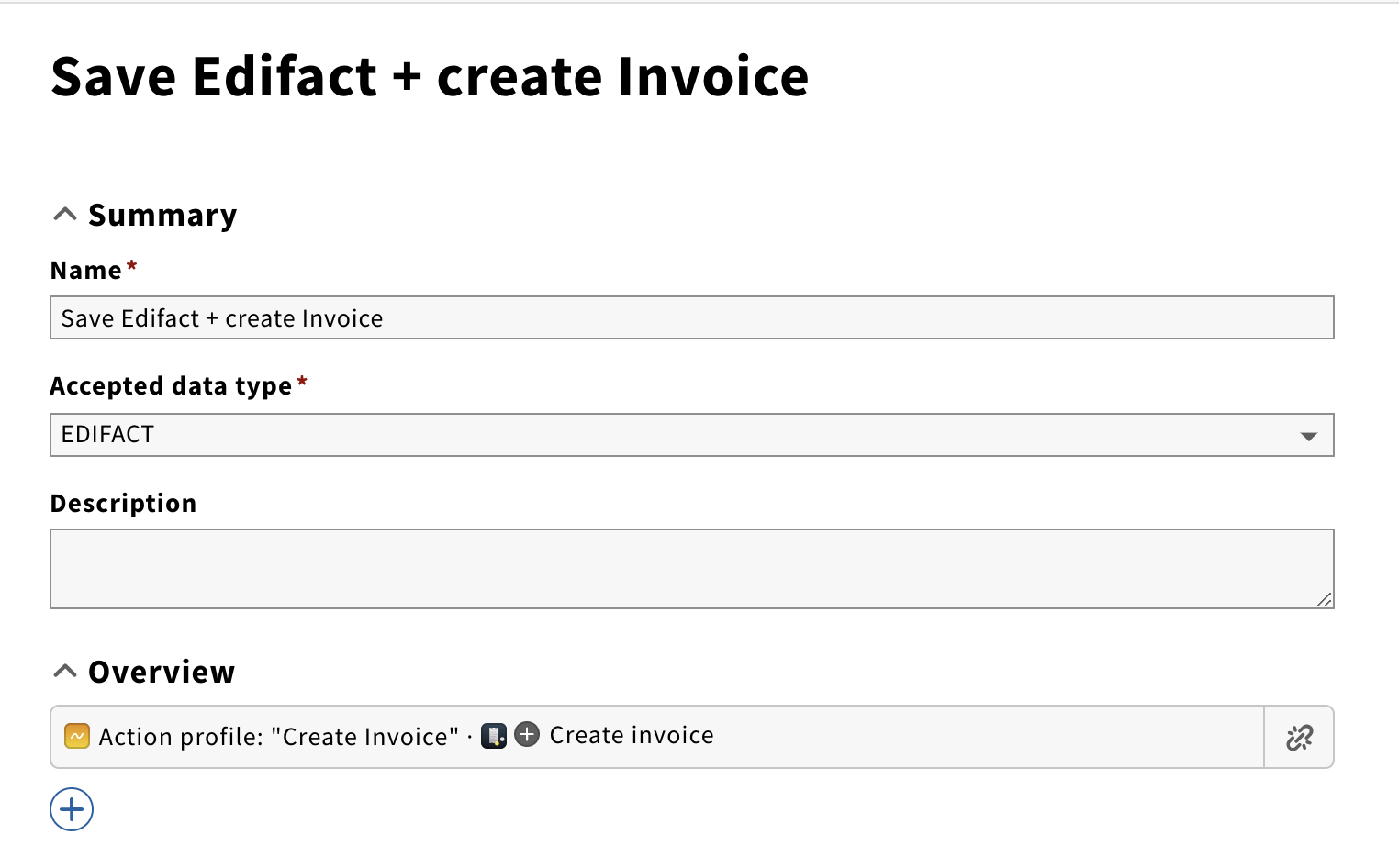
4. Save EDIFACT records and create Invoices
Description
Save EDIFACT records + create Invoices
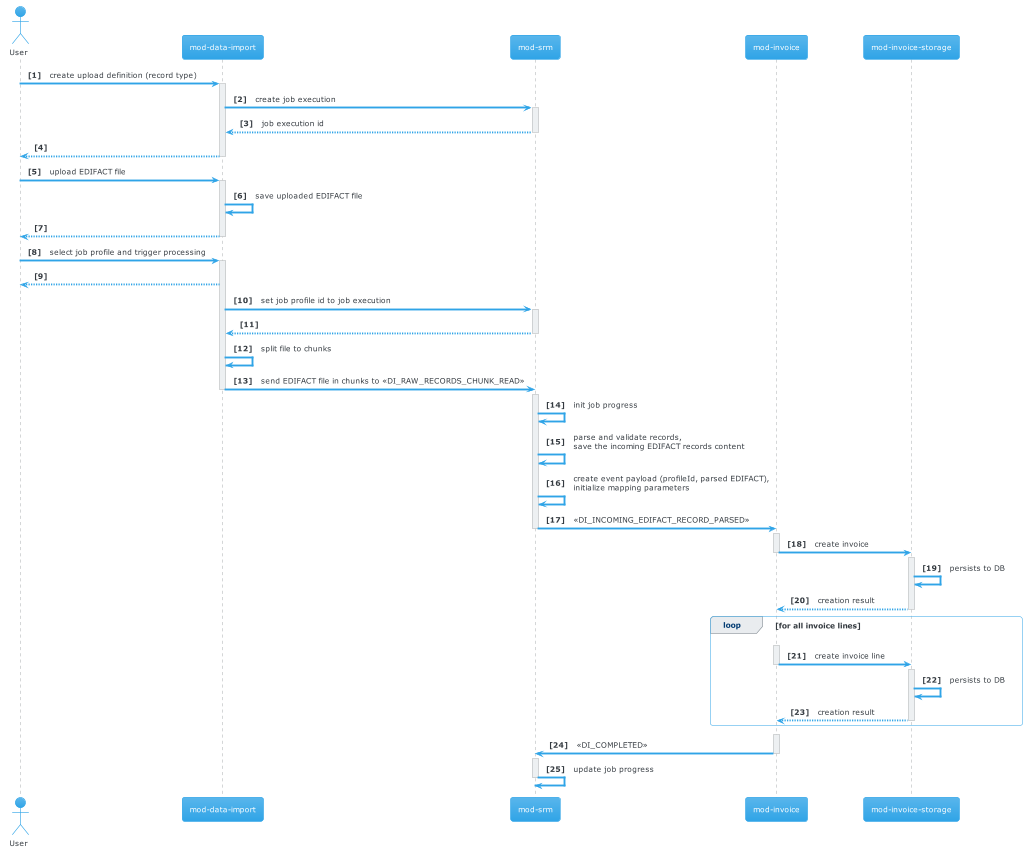
Flow (updated with changes made in Quesnelia R1 2024)
- [1-4] UploadDefinition is created for importing files in mod-data-import
- [2-3] JobExecution is created in mod-srm
- [5] EDIFACT files are uploaded from WEB client to mod-data-import
- [6] Uploaded file is saved chunk by chunk in mod-data-import
- [8-9] User selects the Job Profile and initiates the processing of the uploaded file
- [10-11] The job profile ID is set for JobExecution
- [12-13] EDIFACT file is split into batches of EDIFACT records and put to Kafka queue DI_RAW_RECORDS_CHUNK_READ
- [14-15] mod-srm reads batches from the DI_RAW_RECORDS_CHUNK_READ queue, parses EDIFACT records, and saves the incoming records to the DB to provide them for data import logs. JobExecution is set to IN_PROGRESS status on first chunk received.
- [16-17] mod-srm reads the profile and creates JSON payload (containing parsed EDIFACT ) for processing. Sends it to an appropriate Kafka queue (one message per EDIFACT record) - DI_INCOMING_EDIFACT_RECORD_PARSED
- [18-20] mod-invoice reads the message maps invoice and creates it via HTTP in mod-invoice-storage
- [21-23] mod-invoice saves each invoice lines via HTTP in mod-invoice-storage
- [24] in case of a successful invoice creation mod-invoice issues DI_COMPLETED event
- [25] mod-srm receives DI_COMPLETED event and marks JobExecution status as "COMMITTED"
Diagram (updated with changes made in Quesnelia R1 2024)